
Workshop “Medienkompetenz & Demokratiebildung”
Social media shapes the everyday lives of young people and increasingly influences how information is perceived, opinions are formed, and societal debates are conducted. The workshop 'Media Literacy and Democracy Education' addresses this reality and helps young people reflect on their own media use while developing a critical and responsible approach to digital information.
What is this workshop about?
The focus is on questions like: How are opinions formed on social media? What role do platforms play in democratic processes? How can disinformation and fake news be recognized? And what opportunities and risks do social media bring for society and community life?
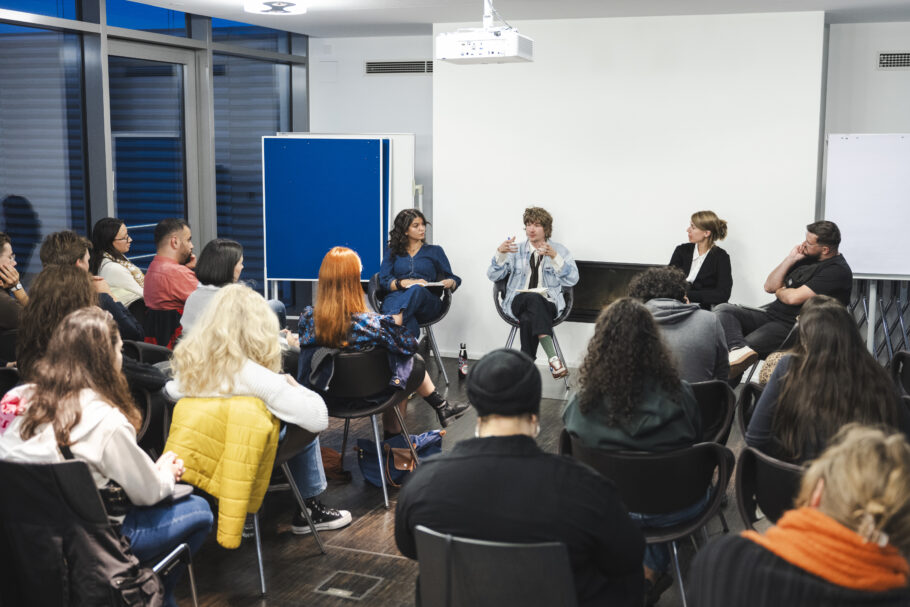
Participants engage with these questions using interactive and practical methods. Through discussions, role-playing, group work, and case studies, different perspectives become visible, and young people are encouraged to share their own experiences and reflect critically.
The goal of the workshop is to strengthen young people’s media literacy and judgment skills, make democratic contexts understandable, and create spaces for exchange and independent opinion formation.
The workshop is aimed at students in lower and upper secondary school and can be flexibly adapted to different age groups and time formats. Both shorter sessions and multi-hour formats are possible.
Focus Areas
• Media literacy and critical handling of information
• Forming opinions on social media
• Fake news and disinformation
• Education for democracy and social participation
• Reflection on your own media use
• Changing perspectives and argumentation skills
Berivan Kalkan
About the Author
My name is Berivan Kalkan. I studied Sociology and Political Science for my bachelor’s degree and Social Sciences for my master’s. In my educational work with young people, I deal with social issues that directly affect their lives.
I design and lead workshops on various topics, including media literacy, critical approaches to racism, sustainability, and other social questions. I mainly work with students in lower and upper secondary school.
In my educational work, a life-world-oriented and participatory approach is particularly important to me. Young people should have the opportunity to share their own experiences, get to know different perspectives, and actively engage with social issues. Interactive and creative methods like discussions, role-plays, or group work create learning spaces that encourage exchange, reflection, and independent opinion-forming.